
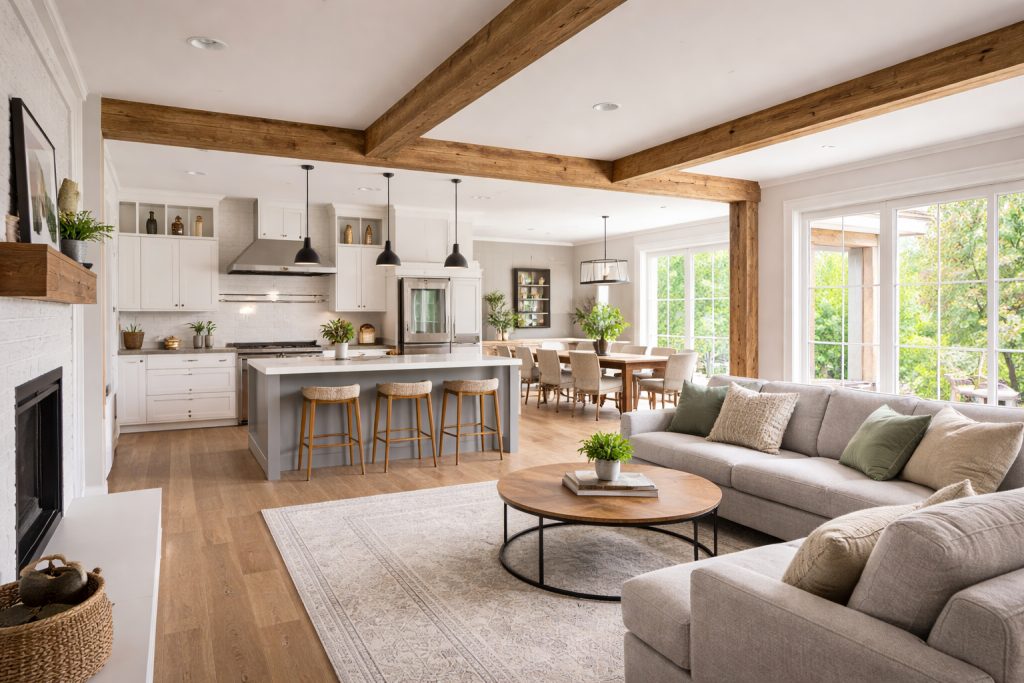
Open concept renovations have become one of the most popular home remodeling trends in recent years. Many homeowners are choosing to remove interior walls to create larger, brighter living spaces that connect kitchens, dining areas, and living rooms. This type of renovation can dramatically change how a home feels, improving both functionality and visual flow.
However, open concept renovations involve more than simply removing walls. Many walls inside a home serve structural purposes, meaning they support the weight of the floors or roof above. Removing these walls without proper planning can lead to serious structural problems.
In this guide, we’ll explore the pros and cons of open concept renovations, along with important structural considerations homeowners should understand before starting a project.
An open concept renovation involves removing or modifying interior walls to create larger, connected living areas. Instead of having separate rooms for the kitchen, dining room, and living room, these spaces are combined into one larger, shared environment.
Open concept layouts are especially popular in older homes where traditional floor plans often include smaller, closed-off rooms.
The goal of an open concept renovation is to create a more spacious and modern living environment that improves both functionality and visual flow.
Home design trends have shifted toward spaces that feel larger, brighter, and more connected. Many homeowners prefer open layouts because they support modern lifestyles where cooking, dining, and socializing often happen at the same time.
Open layouts can also improve natural lighting and make homes feel more welcoming.
For families, open concept spaces allow parents to cook while still interacting with children or guests in nearby areas.
Open concept renovations can provide several major benefits when designed and constructed properly.
Removing interior walls allows natural light from windows to travel further throughout the home.
Instead of being confined to individual rooms, sunlight can brighten multiple areas, making the home feel larger and more inviting.
Traditional homes often have separate rooms connected by narrow hallways or doorways. Open concept designs eliminate these barriers and create a more seamless transition between spaces.
This improved flow can make the home feel more functional and comfortable.
Open layouts are particularly appealing for homeowners who enjoy entertaining guests. The kitchen becomes part of the main gathering space, allowing hosts to cook while interacting with family and friends.
This design encourages social interaction and creates a more welcoming environment.
Many homebuyers today prefer open layouts. Renovating a home to create an open concept design can make the property feel more modern and potentially increase its appeal to buyers.
While open layouts are not the only desirable design, they remain one of the most popular renovation trends.
While open concept renovations offer many benefits, they are not the right solution for every home.
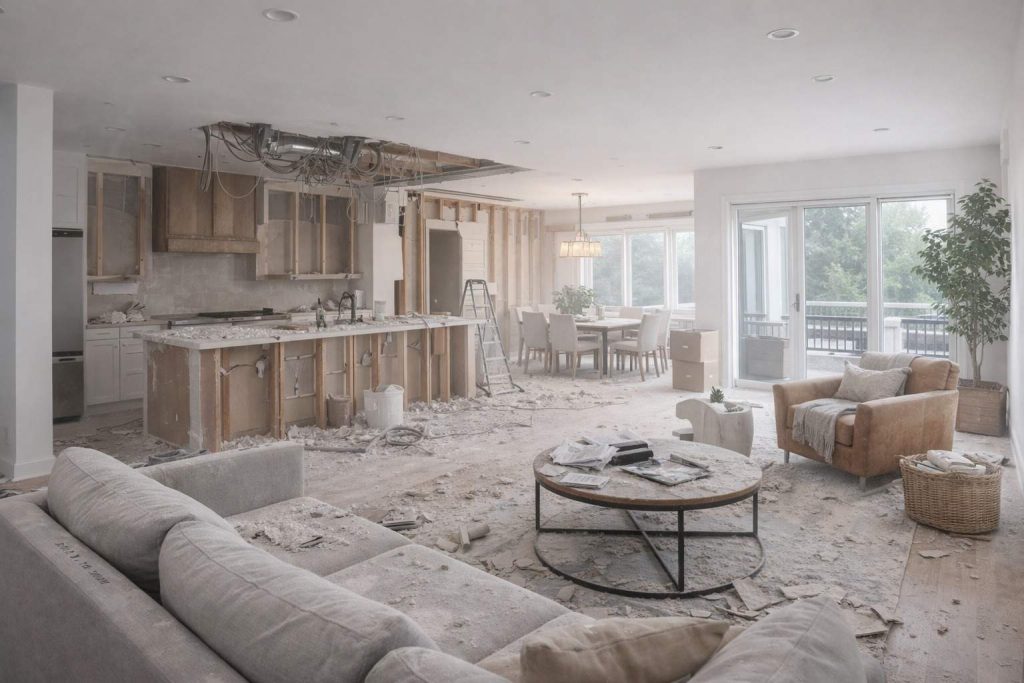
Open layouts remove the separation between rooms. This means fewer quiet or private spaces for activities such as working, studying, or relaxing.
Some homeowners prefer a mix of open spaces and private rooms.
Without walls to contain sound, noise can travel more easily throughout the home.
Kitchen appliances, televisions, and conversations may be heard across the entire open area.
This can be a drawback in busy households.
Walls provide space for furniture, artwork, shelving, and cabinetry. When walls are removed, homeowners may have fewer surfaces available for storage or decoration.
Interior design planning becomes especially important in open concept homes.
One of the most important aspects of open concept renovations is understanding which walls are structural.
Some interior walls are load-bearing walls, meaning they support the weight of the structure above them. Removing these walls requires careful engineering and reinforcement.
Attempting to remove a structural wall without proper support can cause:
Because of this, structural modifications must be carefully planned.
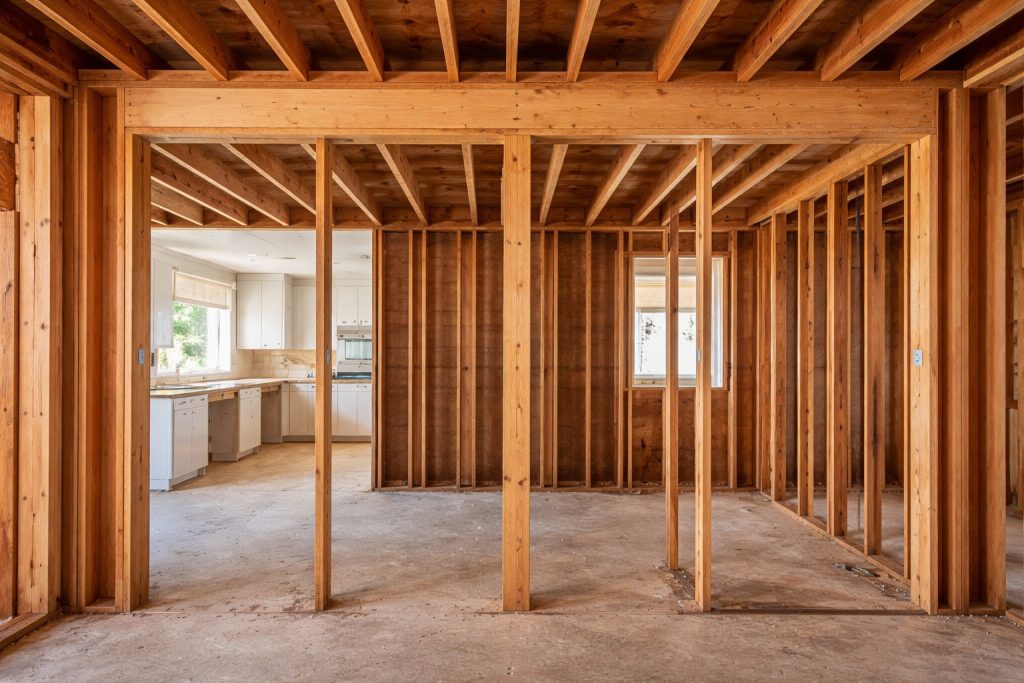
Determining whether a wall is load-bearing requires professional evaluation.
Contractors and structural engineers may examine:
In many cases, older homes may have multiple structural walls that cannot simply be removed.
When a load-bearing wall is removed, the structural load must be transferred to another support system. This is typically achieved by installing a structural beam.
The beam carries the weight previously supported by the wall and transfers that load to vertical supports such as posts.
Common beam types used in renovations include:
The size and type of beam depend on the span length and the amount of structural load.
In many open concept renovations, a structural engineer is required to design the beam system.
Structural engineers calculate:
These calculations ensure the home remains safe and structurally sound after the renovation.
Removing structural walls usually requires permits from the local municipality.
Permits ensure that:
Municipal inspectors may review the work during different stages of the renovation.
Permits also help ensure the work is properly documented for future home sales.
The cost of an open concept renovation depends on several factors.
These may include:
Structural renovations can vary widely in cost, but removing load-bearing walls often ranges from $5,000 to $20,000 or more depending on complexity.
Open concept renovations are often ideal when:
However, every home layout is different, and structural considerations must always be evaluated before planning major changes.
No. Some walls are structural and support the home’s weight. These walls require engineering solutions before removal.
In most cases, yes—especially when structural walls are involved.
Timelines vary depending on structural complexity, but many projects take several weeks once construction begins.
Open layouts are popular among many buyers and can improve a home’s appeal when designed properly.
Open concept renovations can transform how a home looks and functions, creating larger and more connected living spaces. Improved natural light, better flow between rooms, and modern design appeal make this type of renovation highly attractive to many homeowners.
However, removing walls requires careful planning, structural evaluation, and professional construction. Load-bearing walls must be properly supported with structural beams, and permits may be required to ensure the renovation meets building codes.
By working with experienced renovation professionals and structural experts, homeowners can safely create open concept spaces that enhance both comfort and long-term property value.