

Planning a major home renovation is exciting, but proper preparation is essential to ensure the project runs smoothly. Renovations often involve multiple trades, construction equipment, material deliveries, and temporary disruptions to daily routines. Without proper preparation, homeowners may experience unnecessary stress, delays, or damage to parts of the home that are not being renovated.
Taking the time to prepare your home before construction begins can help protect your property, improve safety, and keep the renovation timeline on track. In this guide, we’ll explore how to prepare your home for a major renovation, along with practical tips homeowners can follow before work begins.

Major renovations can affect many areas of the home, even those that are not part of the construction zone. Dust, noise, construction traffic, and material movement can impact surrounding rooms.
Proper preparation helps homeowners:
• protect furniture and belongings
• reduce construction disruptions
• improve job site safety
• keep the renovation schedule organized
• minimize damage to finished areas of the home
Working with your contractor to prepare the home ensures both the renovation team and the homeowner are ready for construction to begin.
Before construction begins, homeowners should fully understand the renovation plan and timeline. A clear renovation plan helps avoid confusion and ensures everyone involved knows what to expect.
Important details to review include:
• the scope of work
• renovation timeline
• areas of the home affected
• material delivery schedules
• contractor access to the home
Having a clear understanding of the project allows homeowners to prepare their home and routines accordingly.
One of the most important steps before a renovation is clearing the work area. Furniture, decor, and personal items should be removed from rooms where construction will take place.
Items to remove may include:
• furniture and tables
• wall art and decorations
• electronics
• rugs and floor coverings
• fragile items
Even areas adjacent to the renovation may need to be cleared to allow contractors to move safely through the home.
Construction crews often move materials, tools, and equipment throughout the home. Protecting flooring and surrounding areas helps prevent damage during the renovation.
Common protective measures include:
• floor protection coverings
• plastic dust barriers
• protective cardboard or board coverings
• sealed doorways to control dust
Professional contractors often install protective coverings, but homeowners can also help by clearing pathways and protecting nearby areas.
Depending on the scale of the renovation, some homeowners may choose to temporarily relocate during construction.
Major renovations that may require temporary relocation include:
• whole-home renovations
• kitchen remodels that remove cooking areas
• structural renovations
• projects involving extensive demolition
If staying in the home during renovations, homeowners should plan how daily routines such as cooking, sleeping, and working will be affected.
For kitchen renovations or projects affecting main living areas, homeowners may need to create temporary spaces.
Temporary kitchen setups may include:
• small appliances such as microwaves or hot plates
• mini refrigerators
• portable food preparation areas
Having a temporary setup helps maintain daily routines during construction.
Renovation sites can be dangerous for pets and young children. Construction areas often contain tools, exposed materials, and equipment that should not be accessed by non-workers.
Safety precautions may include:
• keeping pets in secure rooms
• installing temporary barriers
• supervising children closely around construction zones
Maintaining a safe environment helps prevent accidents during the renovation process.
Clear communication with your contractor is one of the most important parts of preparing for a renovation.
Homeowners should discuss:
• daily work schedules
• access to the home
• parking or equipment needs
• storage space for materials
• expected noise levels
Good communication ensures that both homeowners and contractors understand expectations before construction begins.
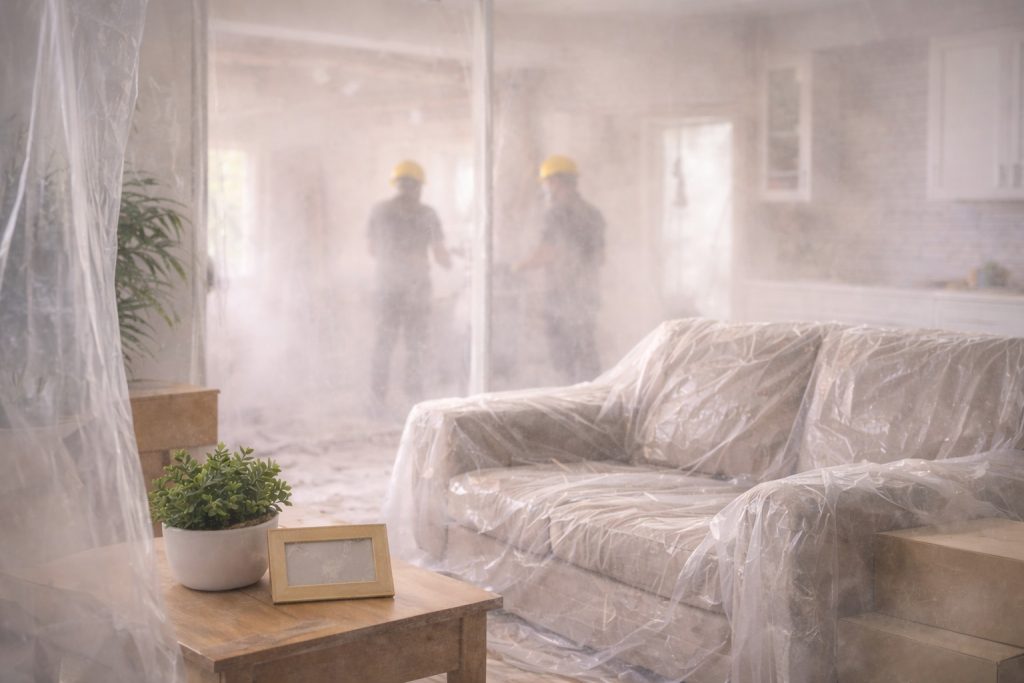
Construction work naturally produces noise and dust. Even with proper containment systems, some dust may spread to nearby areas.
To minimize disruptions:
• cover items in nearby rooms
• seal vents if necessary
• move sensitive electronics away from construction zones
• expect noise during working hours
Understanding that temporary inconvenience is part of the renovation process can help homeowners better prepare mentally for the project.
Large renovation projects often involve deliveries of building materials such as lumber, cabinetry, flooring, or appliances.
Homeowners should plan where these materials will be stored and ensure there is enough space for deliveries.
Possible storage locations may include:
• garages
• driveways
• unused rooms
• protected outdoor areas
Keeping materials organized helps contractors work efficiently.
Before construction begins, it’s important to confirm that any required permits or inspections have been arranged.
Renovations that may require permits include:
• structural changes
• electrical upgrades
• plumbing modifications
• basement renovations
• home additions
Permits ensure the renovation meets building codes and safety regulations.
Homeowners should store valuable items and important documents in safe locations away from construction zones.
Examples include:
• jewelry
• important paperwork
• electronics
• collectibles
Moving these items to secure storage areas helps prevent accidental damage or loss.
Major renovations often involve multiple stages and trades working at different times. Staying informed about the progress of the project helps homeowners stay organized.
Homeowners can prepare by:
• scheduling regular project updates with contractors
• reviewing construction milestones
• discussing any potential changes early
This helps prevent misunderstandings and ensures the project stays on schedule.
For large renovations affecting kitchens, bathrooms, or structural areas, some homeowners choose to temporarily relocate. However, many renovations can still be completed while homeowners remain in the home.
Dust barriers, sealed doorways, and protective coverings can help reduce the spread of dust throughout the home.
Preparation should begin several weeks before construction starts to allow time to move belongings, plan temporary spaces, and coordinate schedules.
Yes. Professional contractors often assist with protecting floors, installing dust barriers, and organizing work areas before construction begins.
Preparing your home for a major renovation helps ensure the construction process runs safely and efficiently. By clearing work areas, protecting nearby spaces, planning temporary living arrangements, and communicating with your contractor, homeowners can minimize disruption and keep the project organized.
While renovations may temporarily change daily routines, proper preparation helps make the experience smoother and more manageable.