
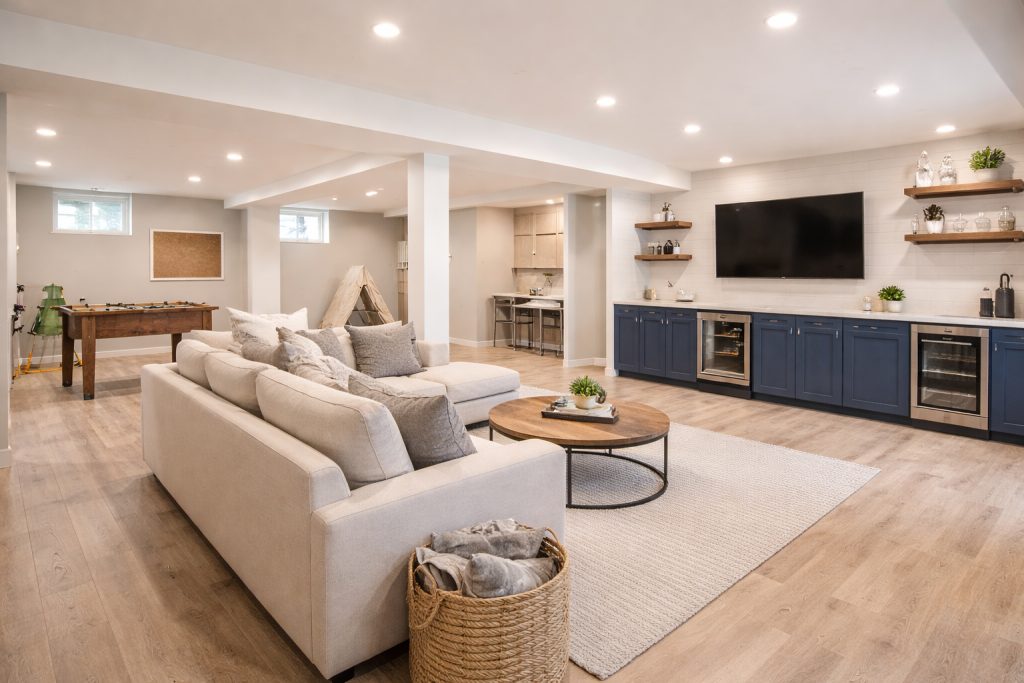
Many homeowners overlook the basement when thinking about usable living space. In many homes, basements become storage areas, unfinished rooms, or spaces used only occasionally. However, with the right renovation approach, a basement can become one of the most valuable and functional areas of the home.
A well-planned basement renovation can significantly increase a home’s usable square footage, improve comfort, and even increase property value. Whether you want additional family space, a home office, or a rental suite, basements offer a flexible opportunity to expand living space without building an addition.
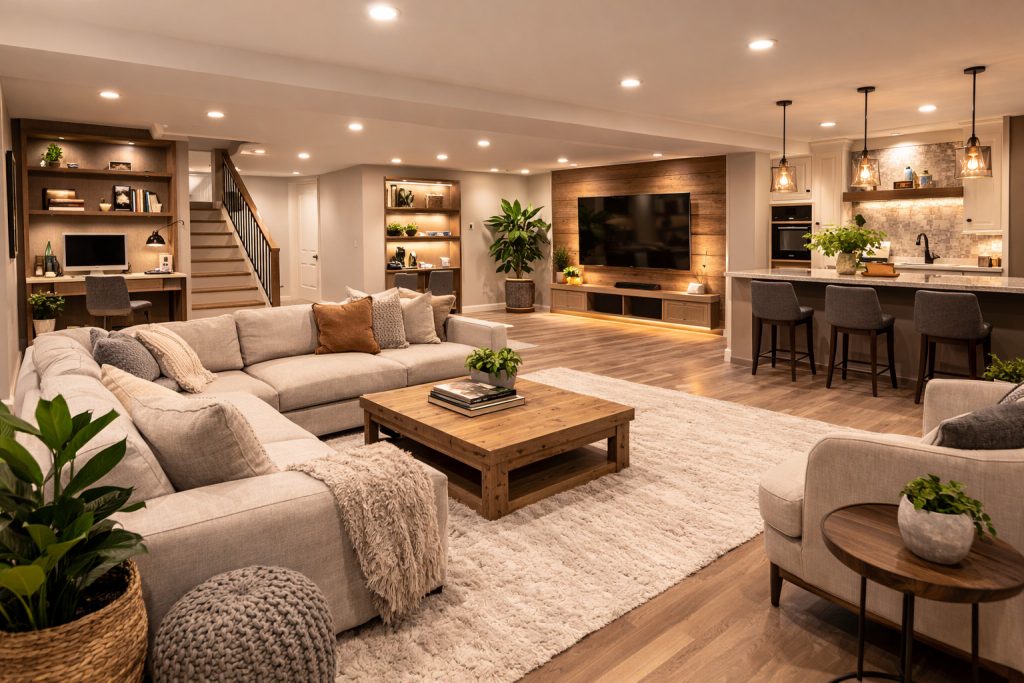
Basement renovations are popular because they allow homeowners to create additional living space without expanding the home’s footprint. In areas where housing costs are high or property sizes are limited, making use of existing space can be a practical solution.
Benefits of basement renovations include:
• increased usable living space
• improved home functionality
• potential rental income opportunities
• increased property value
• improved energy efficiency and insulation
When done properly, a finished basement can feel like a natural extension of the rest of the home.
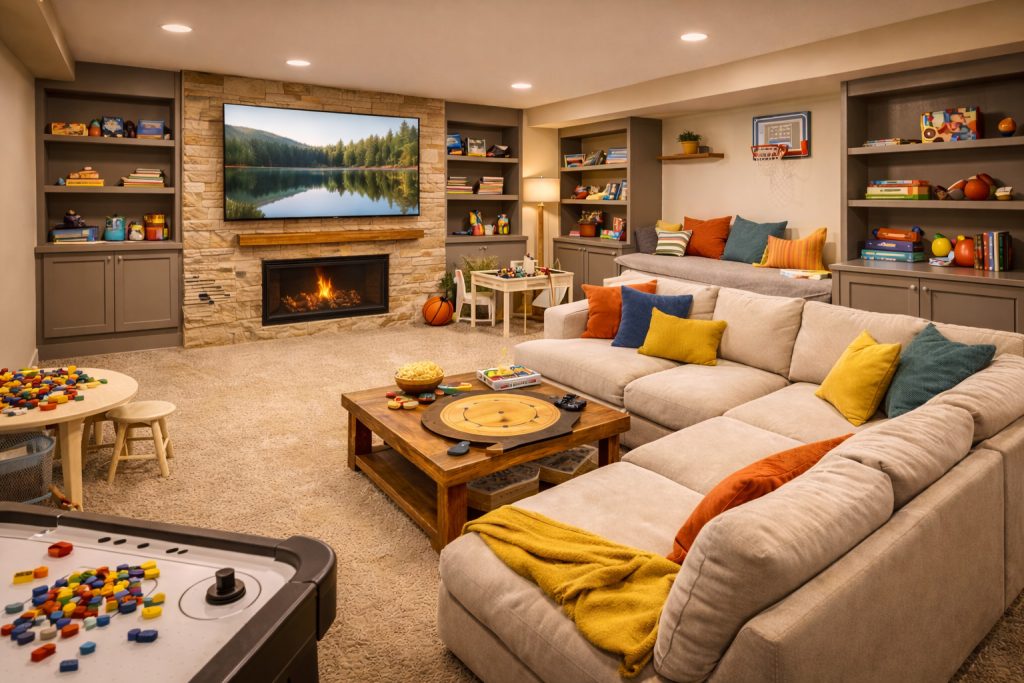
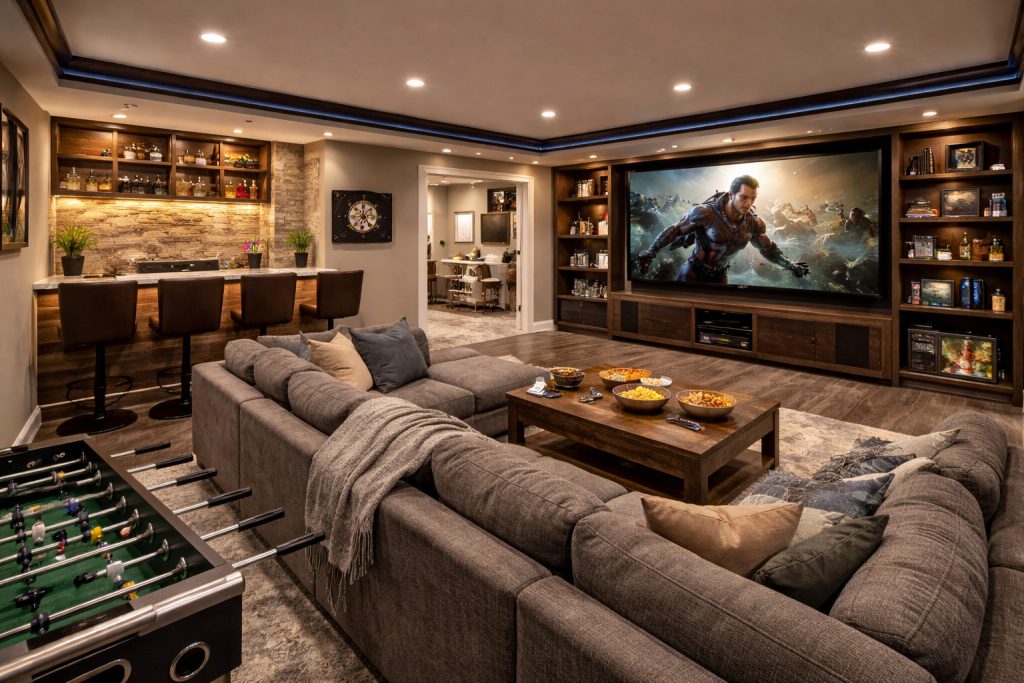
One of the most common basement renovation ideas is creating a family recreation room. These spaces provide a comfortable area for entertainment, relaxation, and family activities.
Recreation rooms may include:
• comfortable seating areas
• media or television setups
• gaming areas
• space for children’s activities
Because basements are often separated from the main living areas, they provide an ideal location for entertainment spaces where noise is less disruptive.
With more people working remotely, home offices have become an increasingly popular basement renovation idea.
Basement offices can provide a quiet and private workspace away from the main activity areas of the home.
Key features of a basement home office may include:
• built-in desks and shelving
• improved lighting systems
• sound insulation
• ergonomic workspaces
Proper lighting and ventilation are important considerations when designing basement offices to ensure the space feels comfortable and productive.
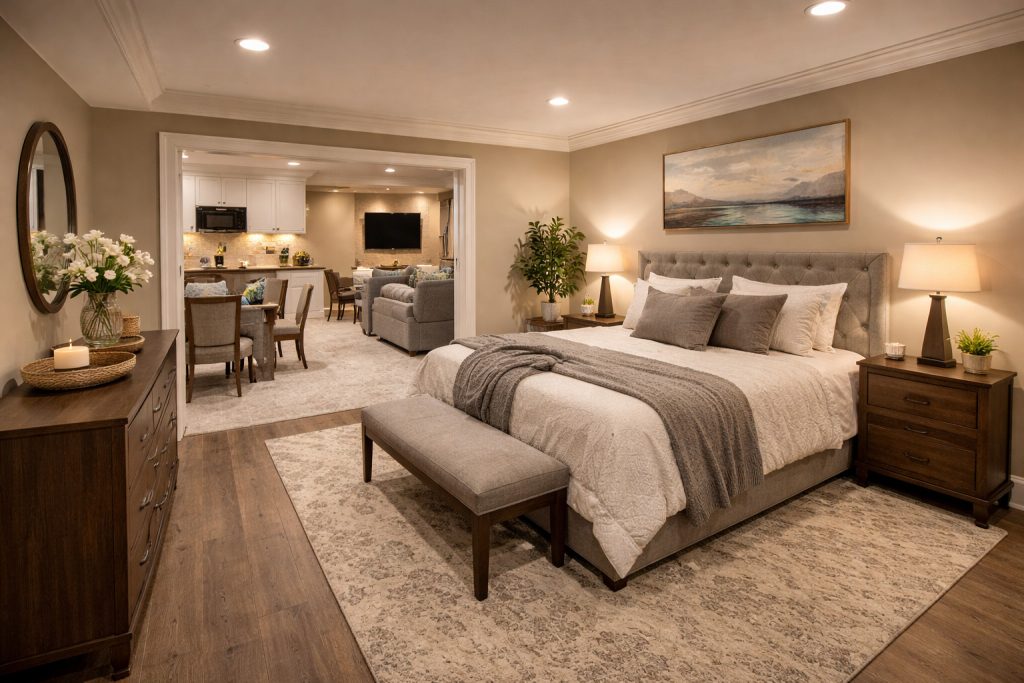
Basements can also be converted into guest rooms or private living spaces for extended family members.
Adding bedrooms in the basement allows homeowners to accommodate visitors while maintaining privacy for both guests and the rest of the household.
Features often included in guest suites include:
• comfortable bedroom layouts
• nearby bathrooms
• storage closets
• separate seating areas
In some homes, basement suites can function as fully independent living spaces.
In many communities, homeowners renovate basements to create secondary suites that can generate rental income.
Rental suites may include:
• a bedroom or multiple bedrooms
• a kitchen or kitchenette
• a bathroom
• living and dining areas
• separate entrances
Because rental units must meet specific building codes and safety standards, these renovations typically require permits and inspections.
When properly designed, basement suites can provide long-term financial benefits for homeowners.
Another growing trend in basement renovations is the creation of home gyms or wellness rooms.
Basements often provide enough space for fitness equipment and exercise areas.
Popular features in basement gyms include:
• rubber or foam flooring
• mirrored walls
• storage for equipment
• dedicated workout areas
Some homeowners also create wellness spaces that include yoga studios, meditation rooms, or small spa-style areas.
Basements are well suited for home entertainment rooms because the space naturally reduces outside light and sound.
Media rooms may include:
• large televisions or projection systems
• built-in surround sound systems
• comfortable theater-style seating
• soundproofing features
These spaces create a home theater experience that is perfect for movie nights or sports viewing.
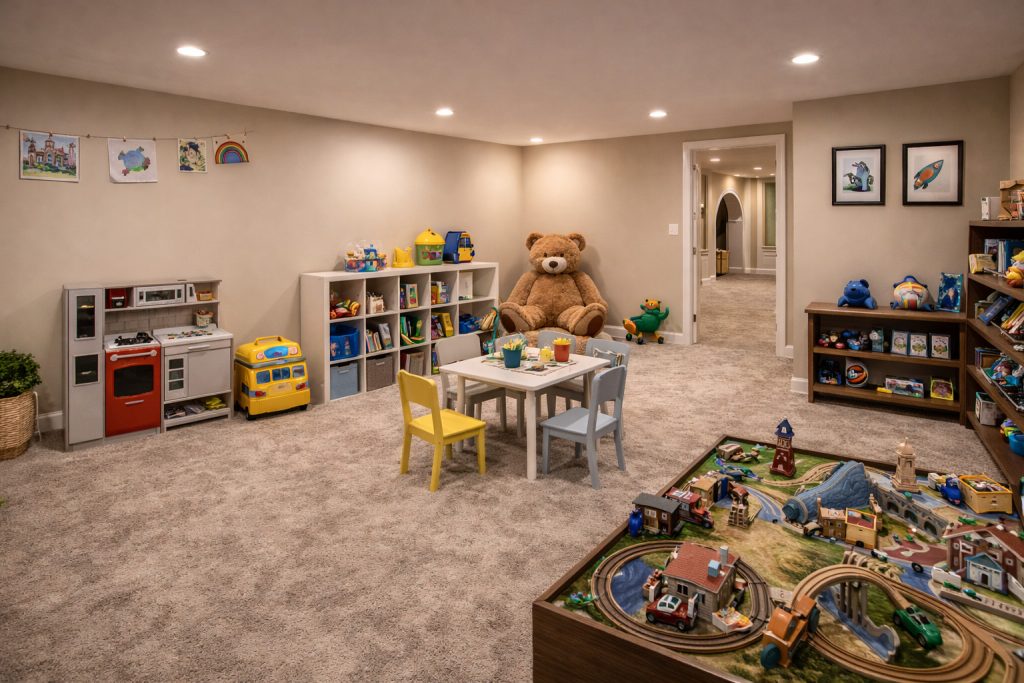
For families with young children, a basement playroom can provide a dedicated space for toys, games, and activities.
Benefits of basement playrooms include:
• keeping toys organized in one area
• creating a safe environment for play
• allowing children to have their own activity space
Storage solutions such as built-in shelves and cabinets help keep playrooms tidy and functional.
Basement renovations often include improvements to laundry areas and utility rooms.
Rather than leaving these areas unfinished, homeowners may upgrade them with:
• built-in storage cabinets
• improved lighting
• folding counters
• organized shelving
Well-designed laundry areas improve functionality and make everyday household tasks more convenient.
Even when basements are renovated into living spaces, homeowners still need storage.
Smart basement renovations incorporate organized storage areas that help keep the space clutter-free.
Storage solutions may include:
• built-in shelving
• wall-mounted cabinets
• under-stair storage
• designated storage rooms
These features allow homeowners to maintain organization without sacrificing living space.
While basement renovations offer many opportunities, several important factors should be considered during planning.
Basements can be prone to moisture issues. Proper waterproofing and moisture management are essential before finishing the space.
Some basements may have lower ceilings that require careful design planning to maintain comfortable living spaces.
Basements often have limited natural light. Adding recessed lighting, larger windows, or improved ventilation can help make the space feel brighter and more comfortable.
Basement renovations that involve plumbing, electrical systems, structural changes, or rental suites may require permits and inspections.
Working with experienced contractors helps ensure that renovations meet building code requirements.
Yes. Finishing a basement can increase the usable square footage of a home and often improves resale value.
Basement renovations typically take 6–12 weeks, depending on the complexity of the project and whether structural work is involved.
In many municipalities, basement suites can be created if they meet local building codes, safety requirements, and permit regulations.
Moisture control and proper insulation are critical to ensuring that basement living spaces remain comfortable and durable.
Basement renovations offer homeowners an excellent opportunity to add meaningful living space without expanding the footprint of the home. Whether you create a recreation room, guest suite, home office, or rental unit, a well-designed basement can dramatically improve how a home functions.
With careful planning, proper moisture control, and professional construction, basement renovations can transform underused space into comfortable, functional living areas that benefit the entire household.
If you’re considering a basement renovation, working with experienced renovation professionals can help ensure the project is designed and completed to the highest standards.