
Professional home renovations can completely transform a house—improving functionality, updating outdated spaces, and increasing long-term property value. Whether you are renovating a kitchen, updating a bathroom, finishing a basement, or completing a full home remodel, the renovation process involves many moving parts.
For homeowners, understanding what happens during a renovation can make the experience far less stressful. Professional contractors follow a structured process that ensures projects stay organized, safe, and aligned with the homeowner’s goals.
In this guide, we’ll walk through the step-by-step process of a professional home renovation, so homeowners know what to expect from the first consultation to the final walkthrough.
Home renovations involve multiple trades, materials, timelines, and inspections. Without proper planning and organization, projects can quickly become delayed or exceed the original budget.
A structured renovation process helps ensure:
Professional contractors use proven project management methods to guide renovations from concept to completion.
Every renovation begins with an initial consultation. This is where homeowners discuss their goals, ideas, and priorities with the contractor.
During this stage, the contractor may ask questions such as:
The goal of this step is to understand the homeowner’s vision and determine whether the project is feasible within the desired timeline and budget.
After the initial discussion, the contractor typically performs a site evaluation of the home.
This allows the contractor to assess:
Site evaluations help identify potential issues early, such as structural walls, outdated wiring, or plumbing constraints.
This information allows the contractor to provide more accurate project recommendations.
Once the scope of the project is understood, the design and planning stage begins.
Depending on the renovation, this stage may include:
For structural changes, such as removing load-bearing walls or installing beams, structural engineering plans may also be required.
This stage ensures that all design decisions are finalized before construction begins.
After planning is complete, the contractor prepares a detailed renovation estimate.
This estimate typically outlines:
A clear estimate helps homeowners understand exactly what is included in the renovation and prevents misunderstandings later.
Professional contractors often review the estimate with homeowners to ensure all expectations are aligned.
Many renovation projects require permits or structural approvals from local municipalities.
Permits may be necessary for:
If structural components are involved, engineers may provide drawings that guide the construction process.
Handling permits before construction begins ensures the renovation complies with local building codes and safety standards.
Before construction begins, the renovation team prepares the site.
Preparation steps may include:
Proper preparation helps ensure construction proceeds efficiently once demolition begins.
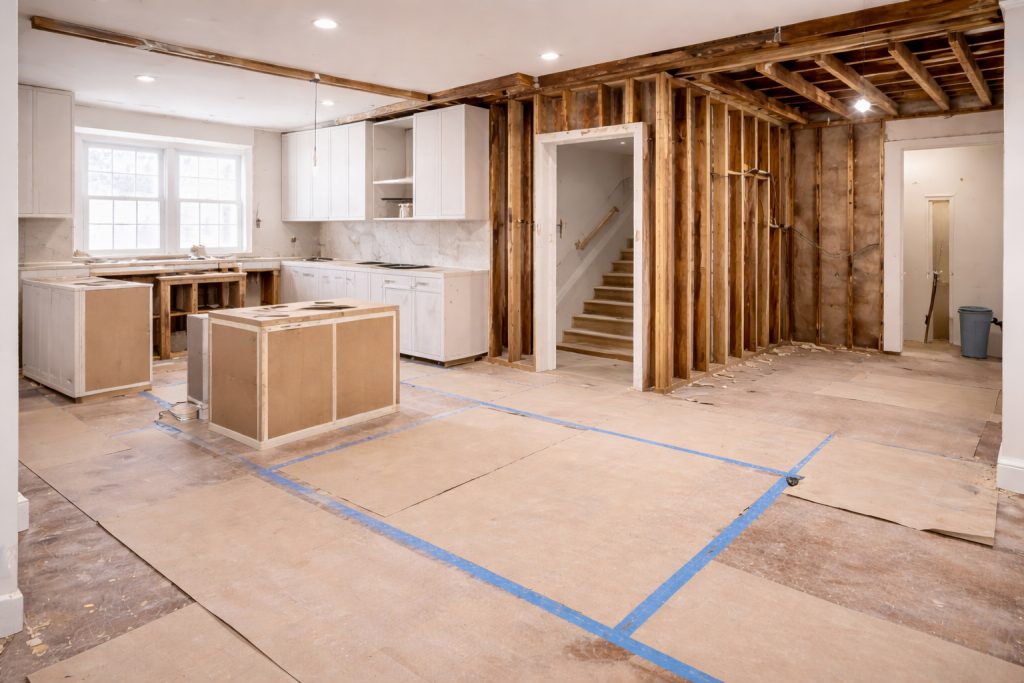
The first stage of physical construction is typically demolition.
This may involve:
If structural changes are planned, this is when contractors may install:
Structural work is carefully coordinated to ensure the home remains stable throughout construction.
Once the space has been opened, contractors install or update mechanical systems.
This stage may include:
These systems are usually inspected before the project moves forward to ensure they meet code requirements.
After mechanical systems are installed, the renovation moves into rebuilding the interior structure.
This stage may involve:
Once drywall is installed and finished, the renovation space begins to resemble the final design.
The finishing stage brings the renovation to life.
This phase often includes:
Attention to detail during finishing work is essential to achieve a high-quality result.
Once construction is complete, the contractor performs a final inspection of the project.
This review ensures that:
If permits were required, municipal inspectors may also perform final inspections before the project is officially completed.
The final step in the renovation process is a walkthrough with the homeowner.
During this walkthrough, the contractor reviews:
This step ensures that homeowners are satisfied with the finished project and understand the work that has been completed.
Experienced contractors bring organization and expertise to every stage of the renovation process.
Benefits of professional renovation management include:
Professional project management helps ensure renovations are completed safely, efficiently, and to a high standard.
Renovation timelines vary depending on project size. Smaller renovations may take several weeks, while larger home remodels may take several months.
Not all renovations require permits. Cosmetic upgrades may not require permits, but structural changes, plumbing, and electrical work typically do.
Planning ahead, finalizing design decisions early, and setting a realistic budget can help homeowners prepare for a smoother renovation process.
For large renovations, temporary relocation may sometimes be recommended to minimize disruption and ensure safety.
Home renovations involve many steps, but when managed by experienced professionals, the process becomes much more organized and predictable. From initial consultation and design planning to construction and final walkthrough, each stage plays an important role in delivering a successful renovation.
Understanding the step-by-step process helps homeowners feel more confident when beginning renovation projects and allows them to better collaborate with contractors throughout the project.
With careful planning, skilled workmanship, and clear communication, professional renovations can transform a home while maintaining safety, quality, and long-term value.