

Hiring a contractor is one of the most important decisions homeowners make when planning a renovation. Whether you’re remodeling a kitchen, upgrading a bathroom, finishing a basement, or renovating an entire home, the contractor you choose will have a direct impact on the quality, cost, and timeline of the project.
A good contractor brings organization, experience, and professional craftsmanship to the job. They help coordinate trades, manage construction schedules, and ensure that the renovation meets building codes and safety standards. On the other hand, hiring the wrong contractor can lead to delays, unexpected costs, and unsatisfactory results.
Before committing to a renovation project, homeowners should take time to interview potential contractors and ask the right questions. The answers you receive can help you evaluate professionalism, experience, and reliability.
Here are 10 important questions every homeowner should ask before hiring a contractor.

Renovation projects involve many moving parts. Contractors manage materials, trades, permits, scheduling, and communication throughout the process.
Asking thoughtful questions allows homeowners to:
• understand how the contractor operates
• evaluate experience and qualifications
• clarify expectations for the project
• identify potential red flags early
• build confidence before construction begins
Taking the time to properly vet contractors can prevent costly mistakes later in the renovation.
One of the first questions homeowners should ask is whether the contractor is properly licensed and insured.
Professional contractors should carry:
• business licensing
• liability insurance
• workers’ compensation coverage
Insurance protects homeowners from liability if accidents occur during construction. Licensed contractors are also more likely to follow local building codes and industry standards.
Always verify documentation rather than simply taking a verbal confirmation.
Not all contractors specialize in the same type of work. Some focus on new construction, while others specialize in renovations, structural work, or commercial projects.
Ask contractors about their experience with projects similar to yours.
For example:
• kitchen renovations
• bathroom renovations
• basement finishing
• structural renovations
• whole-home remodels
Contractors with relevant experience are better equipped to anticipate challenges and manage complex renovations.
Reputable contractors should be able to provide references from past clients. Speaking with previous customers can provide insight into how the contractor communicates, manages projects, and handles unexpected challenges.
When contacting references, consider asking:
• Was the project completed on schedule?
• Did the final cost match the estimate?
• Was communication clear during the renovation?
• Were you satisfied with the workmanship?
Positive feedback from past clients is often one of the strongest indicators of a reliable contractor.
A contractor’s portfolio can reveal a lot about the quality and style of their work. Many contractors maintain project galleries that showcase completed renovations.
Look for:
• before-and-after photos
• examples of similar projects
• details in craftsmanship and finishing
Reviewing past projects helps homeowners determine whether a contractor’s work aligns with their expectations.
Professional contractors typically follow a structured process when managing renovation projects.
This process may include:
• initial consultation and site visit
• project planning and design
• cost estimation and scope definition
• permit coordination if required
• construction scheduling
• project completion and final inspection
Understanding the contractor’s workflow helps homeowners feel confident that the project will be organized and well managed.
Many renovation projects require building permits and inspections from local municipalities.
Permits may be required for:
• structural changes
• electrical upgrades
• plumbing modifications
• basement suites or additions
Ask whether the contractor will coordinate permits and inspections as part of the renovation process. Contractors familiar with local regulations can help ensure projects remain compliant with building codes.
Every renovation project has a timeline that depends on the scope of work, material availability, and contractor scheduling.
A contractor should be able to provide a realistic timeline that includes:
• project start date
• key construction phases
• estimated completion date
While some delays are unavoidable, experienced contractors provide reasonable timelines based on their past experience.
Clear communication is essential for successful renovation projects.
Ask the contractor how updates will be shared during construction.
Examples include:
• scheduled progress updates
• email or phone communication
• on-site walkthroughs
• project milestones
Knowing how communication will occur helps homeowners stay informed throughout the renovation.
Renovation plans sometimes change during construction. Homeowners may choose different materials or request design adjustments as the project progresses.
Ask the contractor how change requests are managed.
A professional process typically includes:
• written change orders
• updated cost estimates
• revised project timelines
Clear documentation prevents misunderstandings and helps maintain transparency.
Before any renovation begins, homeowners should always have a written contract outlining the details of the project.
A professional renovation contract typically includes:
• detailed scope of work
• cost breakdowns
• payment schedule
• timeline expectations
• responsibilities of both parties
Written agreements protect both homeowners and contractors and help ensure the project proceeds smoothly.
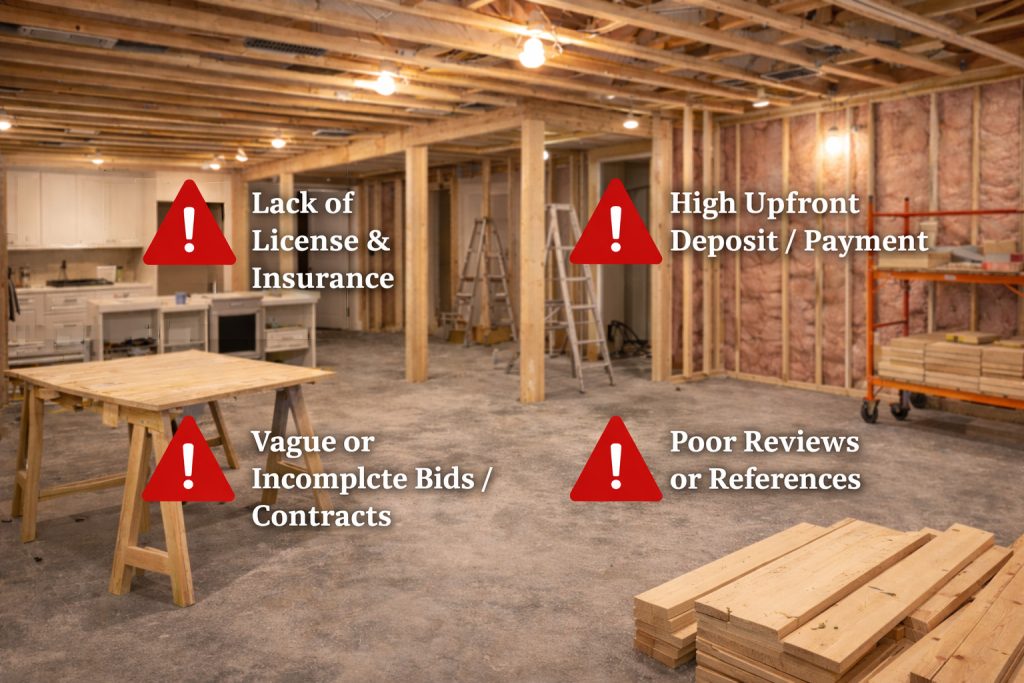
In addition to asking the right questions, homeowners should watch for warning signs that may indicate potential problems.
Possible red flags include:
• unwillingness to provide references
• vague or incomplete estimates
• lack of licensing or insurance
• pressure to make quick decisions
• requests for large upfront payments
If something feels uncertain during the hiring process, it may be worth exploring additional contractor options.
Most homeowners speak with two to three contractors before making a final decision. Comparing multiple estimates helps provide a clearer understanding of project costs and expectations.
Reliable contractors typically have strong references, clear communication, professional documentation, and a history of completed projects.
Not necessarily. While budget is important, the lowest estimate may not always reflect the best value. Experience, quality of work, and professionalism should also be considered.
A detailed estimate should include the scope of work, materials, labour costs, project timeline, and any permit or inspection requirements.
Hiring a contractor is a major step in any renovation project. By asking the right questions and carefully evaluating contractors before making a decision, homeowners can significantly improve the chances of a successful renovation.
Taking the time to review credentials, verify experience, and clarify expectations helps create a strong working relationship between homeowners and contractors.
With careful planning and the right professional team, renovation projects can transform a home while maintaining quality, safety, and long-term value.